




Step-by-Step High Heel Sandals Manufacturing Process Explained
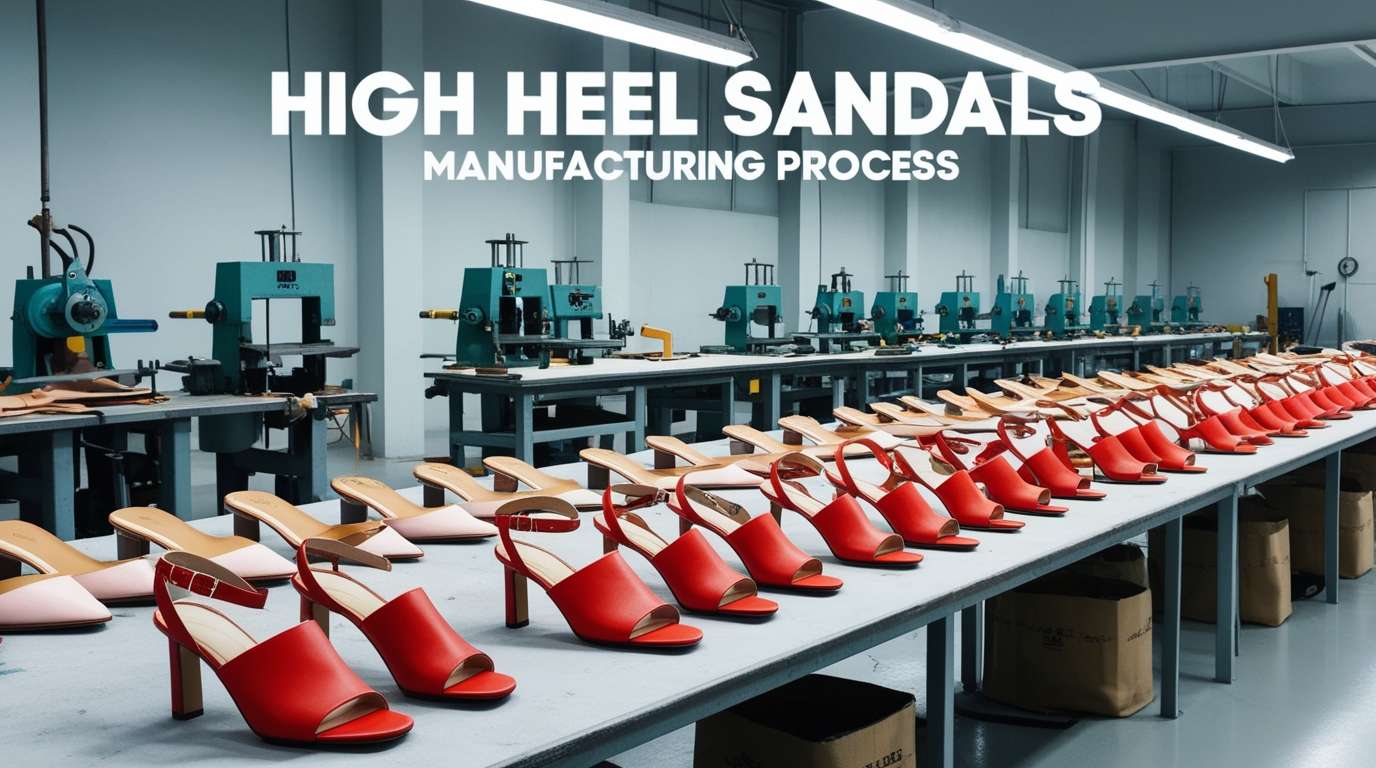
Women's footwear, like high-heeled sandals, is popular all over the world. They have a specific popularity because of the height, confidence, and beauty they enhance when women wear them. It is not easy to walk in such high-heeled sandals, which also brings praise for the manufacturers that provide such impressive quality. These are the footwear that are sophisticated, and need to balance against the risk of stumbling and heel breaking. That’s why the production method has to be really strict in terms of quality. Just a slight error in the production can cause lots of problems for women who wear them. Therefore, brands never take any risk when it comes to meeting their customers’ requirements in high-heeled sandals production. This is how this production process goes.
Design Development
The first and initial step is the design that every company requires for its product. The same happens in high-heeled sandals because there must be a foundation of a high-heeled sandal in terms of design, heel height, and material type.
To do that, companies have to do standard feet scanning.
Then they design a sketch in soft and hard forms. That is the basic requirement for production, because it allows companies to add and subtract features from it.
They use CAD software to digitally transform the high heel sandal’s design to meet their requirements.
It also includes the heel’s last formation, which is a wooden mold of a standard woman’s foot to try the sample. Once they get their design, they move on to the next step.
Material Selection
The material selection is the second step, where manufacturers have to source materials for each piece of high-heeled sandals. It includes the entire upper part, straps, inner sole, midsole, heel, and other supporting pieces. Rubber, leather, EVA foam, metal shank, and memory foam are sourced for the soles of sandals. PU leather or natural leather is sourced for the upper part of the sandals. Wood, foam, and even metal are sourced for heels. Once manufacturers source these materials, they move on to the first sample of the order.
Sample Production for Approval
The sample is mandatory because it helps clients to inspect the quality, design, and every feature they want. The quality grade clients ask for is a part of the inspection, where they also make sure the manufacturer is authentic. Lots of features are included in it, where clients approve or disapprove the appearance, comfort level, and durability of sandals. Once they approve the sample, they give the green light for bulk production.
Bulk Production Starts After Sample Approval
Then the bulk production begins, where manufacturers go for the full-scale process. All the units in the production have to go through a consistent procedure, and it goes like this.
1. Pattern Formation and Material Cutting
The pattern formation team works on the pattern and material cutting process. Automatic and manual methods are followed in the bulk cutting process. Stamping machines cut the patches that go ahead for the stitching process in the high heel sandals. Workers also cut the complex parts where a machine is not a suitable option. Even the parts that go inside the soles get automatic cutting according to the design of the sandals.
2. Vamp and Upper Part Production
Then the vamp and entire upper part of the high heel sandals is manufactured. All the patches and pieces that come out of the stamping machine go to the stitching process. Manufacturers usually use leather, PU leather, satin, or TPU for the vamp of high heel sandals.
3. Sole Production and Upper Part Stitching
Then there is a team that works simultaneously on the sole production. Soles include insoles, outsoles, and midsoles. Multiple layers have to go in it, and manufacturers use EVA foam, PU stiffener, and metal shanks for that. They install various layers of soles in the high-heeled sandals to combine strength, comfort, and durability. Machines and workers use adhesives to attach all these layers in a single combined layer.
Then the workers and machines combine the upper parts and the soles of high-heeled sandals. They use nails, stitches, and adhesives to create an unbreakable bond between soles and upper parts. Once the upper and middle parts of the high heel sandals are completed, the last thing they need are high heels.
4. Heel Production
Manufacturers use wood, ABS, or metal to manufacture the heels of the high-heeled sandals. A separate team manufactures them in bulk. Machines manufacture all the types of heels they need, whether it is about block, stiletto, or wedge heels. Manufacturers manufacture the heels based on the height they need.
5. Sole and Heel Attachment Process
Then the last step comes, where workers manually attach heels to the soles. They use adhesives and fasteners for that. Experts use tools to do that, which ensures high strength and consistency in the heel attachment.
Quality Inspection and Test
Lastly, the quality assurance team inspects all the units one by one of some units. They remove the defective high-heeled sandals if they find any. This quality inspection allows the manufacturers to meet the quality requirements of the clients. Various tests also take place for color strength, heel fatigue, sole strength, chemical resistance, and strap strength.
Packaging and Distribution
Then the final packaging takes place, where the workers place anti-crease protectors in all pairs of sandals. Pack all the pairs in plastic bags and then place them in their respective sizes of boxes. All the boxes go inside large cartons for the distribution process. Tagging is also a part of it, which allows the logistics experts to identify and place boxes safely.
Conclusion
High heel sandal brands follow an extensive process to manufacture them in bulk. The process includes standard and customized production. From the sketch to the final heel attachment process, all the steps go in order. They have to source different materials for each piece of heel since there are lots of layers and units inside a pair of sandals. These layers are of different materials, which means companies have to source different materials for that. Once the production reaches final completion, the distribution teams dispatch the shipments to the desired destinations.
Featured Articles
Shoe retail today is a tough and competitive market. Customer returns eat up margins. One weak pr...
READ FULLThere are some terms that often cause confusion in people's minds. When it comes to private label...
READ FULLWomen's footwear, like high-heeled sandals, is popular all over the world. They have a specific p...
READ FULL